Anaerobic Jar (polycarbonate) About
Keeping in mind ever-evolving requirements of our respected clients, we are offering a premium quality range of
Anaerobic Culture Jar Polycarbonate.Applications:
- EQUITRON Anaerobic Jars are ideal for all tests requiring strict anaerobic conditions in closed environment.
EQUITRON Advantages:
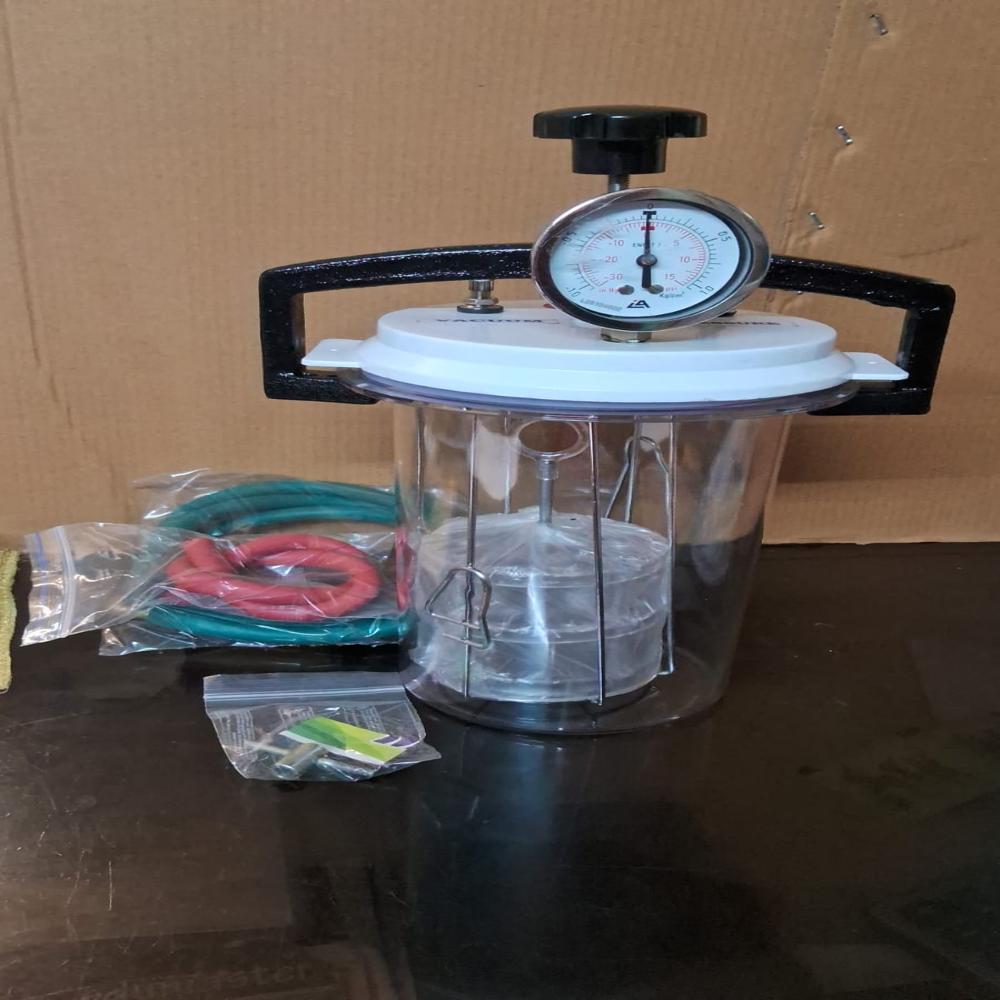
- A strong moulded and transparent jar, makes it ideal for critical tests requiring visual in process monitoring.
- A compound gauge (manometer) eliminates guesswork in monitoring cycle process.
- Aluminium cast lid, heat cured epoxy coated with a bridge clamp for easy tightening.
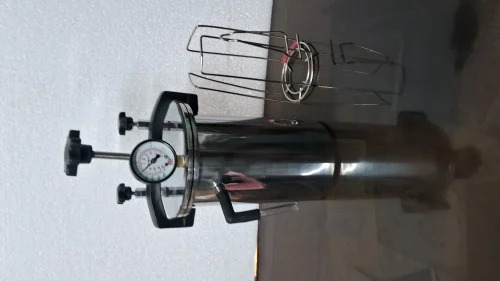
- SS Rack for 100 mm plates, with gas pack sachet holder.
- Cold Catalyst fitted to underside of lid.
- Compound Gauge on lid.
- Two needle valves on lid.
- Safety valve on lid.
Precise Anaerobic Conditions for Microbiological ResearchAchieve optimal growth conditions for anaerobic organisms with this polycarbonate jar, engineered with a reliable silicon O-ring seal and integrated pressure gauge. The transparent body offers visibility, while the sturdy design and pressure relief valve prioritize laboratory safety during microbiological studies.
User-Friendly, Safe, and Durable DesignThis anaerobic jar features a leak-proof system, molded handle for effortless transport, and stainless steel carrier for up to 9 petri dishes. Autoclavable components and corrosion-resistant materials support safe repeated use, even in challenging lab settings.
FAQ's of Anaerobic Jar (polycarbonate):
Q: How is an anaerobic environment achieved inside this polycarbonate jar?
A: An anaerobic environment is created by sealing the jar using its silicon O-ring gasket and employing catalyst sachets to remove oxygen. The integrated pressure gauge and relief valve allow monitoring and regulated removal of air to ensure optimal anaerobic conditions for microbial cultivation.
Q: What are the main benefits of using a polycarbonate anaerobic jar over traditional glass models?
A: Polycarbonate anaerobic jars are lighter, more durable, and resistant to shattering. Their transparent body provides clear visibility of samples, and they are easier to handle and transport, making them ideal for busy laboratory environments.
Q: When should laboratories use this anaerobic jar?
A: This jar should be used when cultivating or isolating anaerobic bacteria that require oxygen-free environments. It's particularly useful for clinical diagnostics, microbiological research, and whenever precise atmospheric control is critical.
Q: Where can this anaerobic jar be safely operated and stored?
A: It is suitable for use and storage in hospitals, microbiology, and pathology laboratories. Its corrosion-resistant and autoclavable design allows it to withstand frequent sterilization and handling in professional settings.
Q: What is the process for preparing the anaerobic jar for use?
A: Place up to nine 90 mm petri dishes on the stainless steel carrier inside the jar. Insert catalyst sachets and secure the sealed lid using the manual screw top. Use the pressure gauge to monitor internal conditions and adjust as necessary before incubation.
Q: Can this jar be autoclaved, and what are its temperature limits?
A: Yes, the jar and its accessories are autoclavable and can withstand temperatures up to 120C, ensuring sterility between uses.





 Send Inquiry

 Send Inquiry
 Send Inquiry